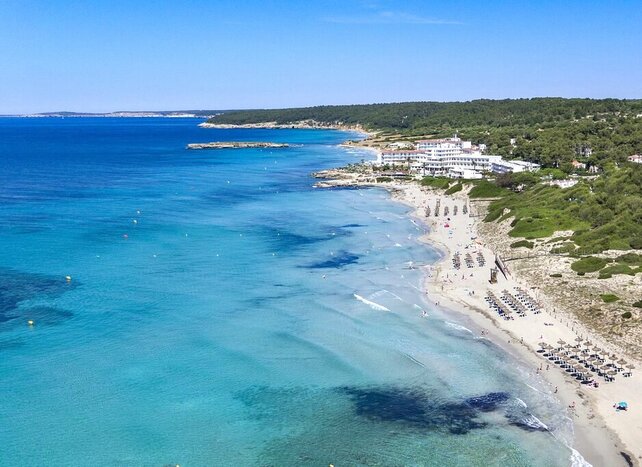
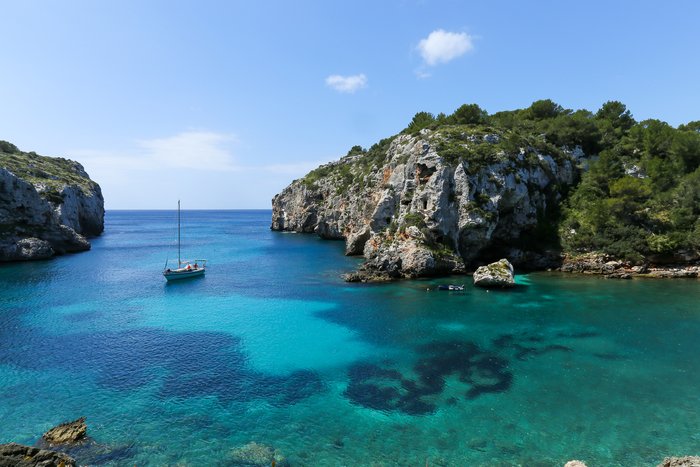
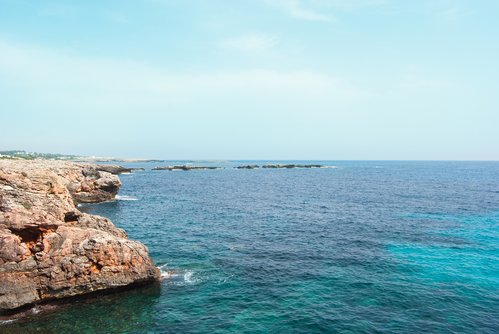
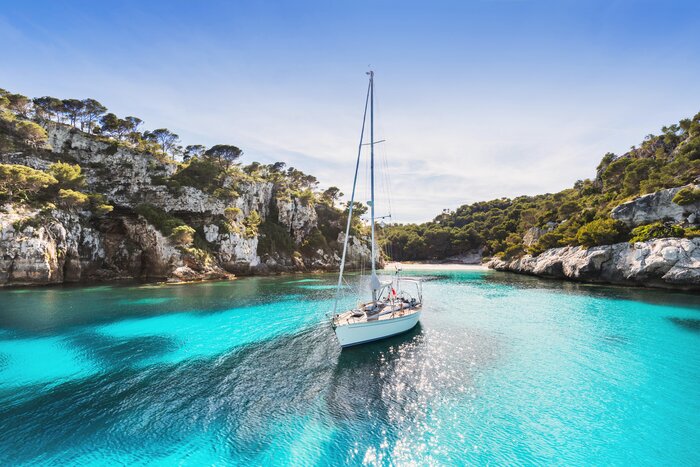
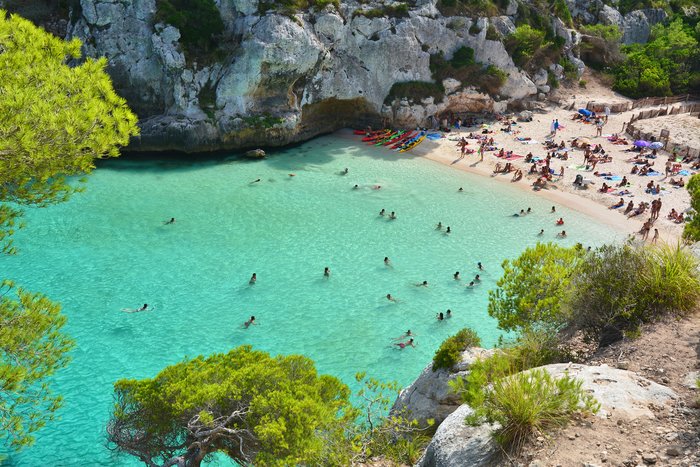
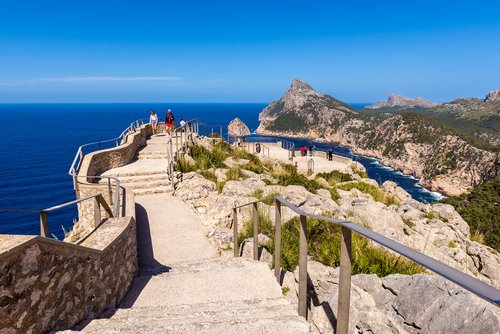
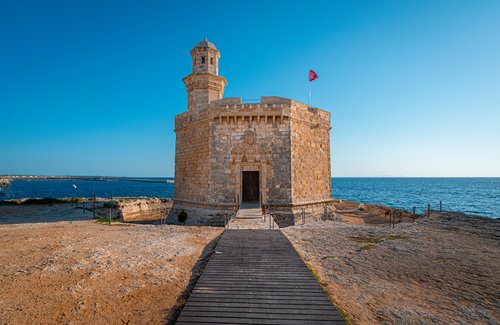
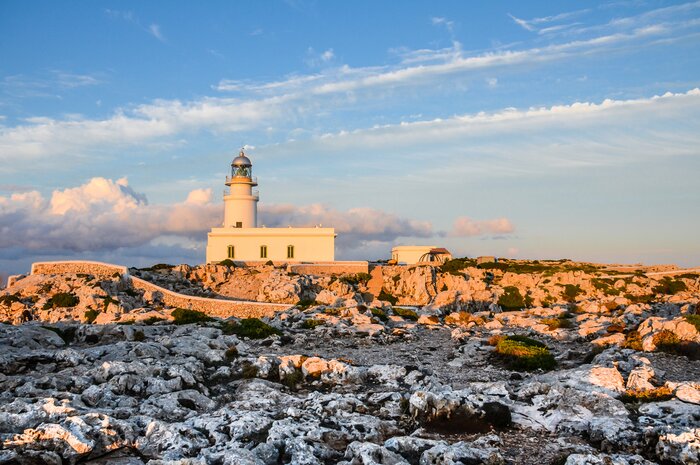
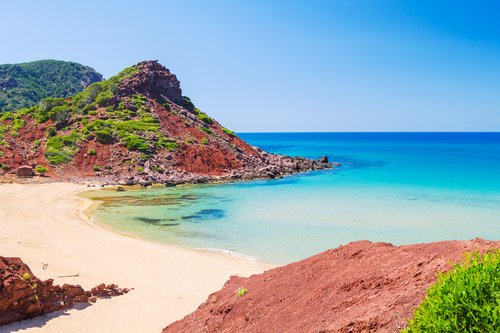
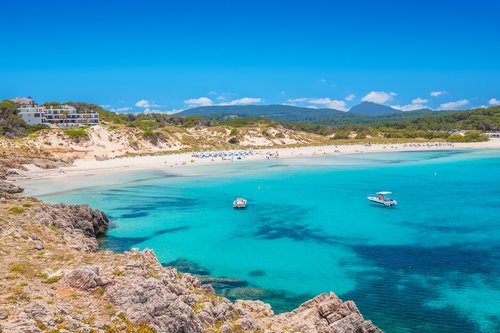
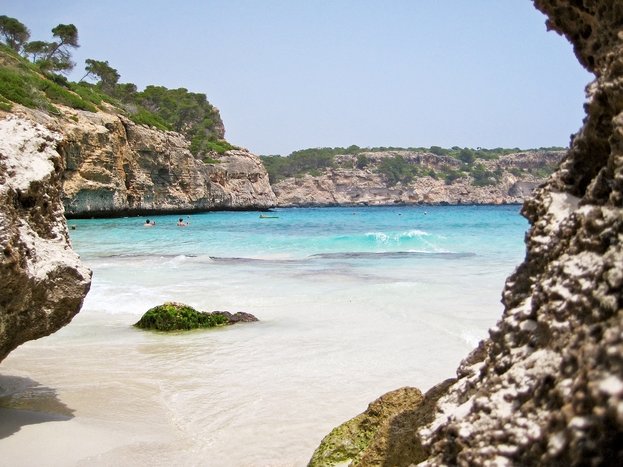
Ruggedly wild Menorca is the easternmost of Spain's Balearic Islands, set in the Mediterranean about 50 miles (80 km) from Mallorca. It's smaller and far less developed than its neighbors (including Ibiza), and has preserved an unhurried way of life and strong connection to nature, thanks in part to its designation as a UNESCO Biosphere Reserve. Its coastline stretches for more than 134 miles (216 km) and is dotted with over 200 calas (small coves), ranging from wide sandy bays and turquoise waters of the south to secluded inlets and red sands of the north, all backed by pine forests and limestone cliffs, and connected by the historic Camí de Cavalls coastal "horse path." Inland, a landscape of drystone walls, olive groves, vineyards, and farms highlights Menorca's agricultural heritage, while historic port towns like Ciutadella and the capital Maó (Mahón in Spanish) reveal layers of Spanish, British, and Mediterranean influence.
Beach-hopping is a highlight, as is the plethora of water activities available, with popular Cala Mitjana and the more isolated Cala Fustam among the many south coast stops, while the north coast offers Cala Pregonda, special for its Martian appearance, and the difficult-to-get-to-but-worth-it Cala Pilar. Outdoor enthusiasts can hike, cycle, or ride horseback along the Camí de Cavalls, or explore the wetlands and birdlife of the S'Albufera des Grau Nature Park. Culture seekers can wander the atmospheric old quarters of Ciutadella and Maó, visit whitewashed villages like Binibèquer (Binibeca) or Es Mercadal at the foot of Menorca's tallest hill, Monte Toro, or uncover Menorca's prehistoric past through its distinctive Talaiotic stone structures scattered across the island. Others come simply to enjoy the food and pastoral scene (vineyards, olive groves, and family-run farms), often best discovered on a scenic road trip or with a local guide.