Weather
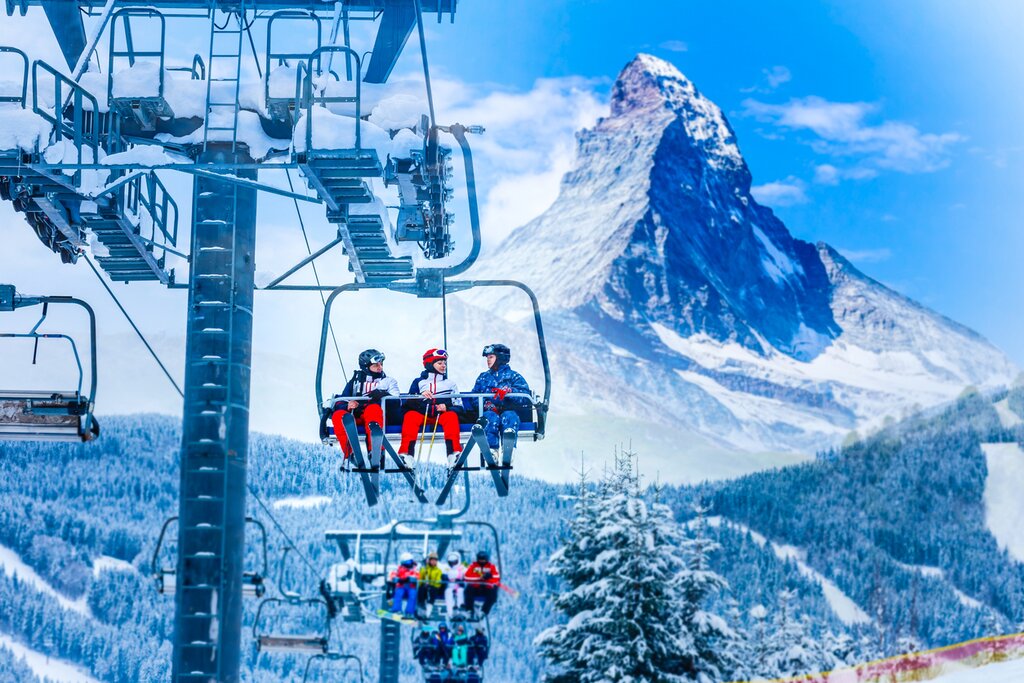
February is midwinter in Switzerland, and places above 5,000 feet (1,500 m) will almost certainly have snow on the ground. The heaviest snowfall occurs in January and February, and conditions are ideal for snow sports at higher altitudes. Foehn winds (warmer southerly winds on the northern slopes of the Alps) occur in winter and can lead to unpredictable, sudden weather.
In lower-altitude towns, cities, and valleys, February weather can be dull, cold, and wet, but heavy snow is rare at lower levels. Winter days are also short, but by February, they are increasing, and nights are shorter than in late December. The average February temperature in lowland cities like Zürich, Geneva, and Lugano is 39°F (4°C). Temperatures at higher elevations in the Alps are generally colder. For example, the average February temperature in Zermatt is 23°F (-5°C).
Crowds & Costs
February is the high season for travel to Switzerland, with visitors from Europe and around the world coming to the Alps for winter sports vacations. The Bernese Oberland, Valais, and St. Moritz areas of the Alps are especially busy. Costs are always high in Switzerland, but they're at a peak in the winter. This applies to mountain resorts as well as cities, since most travelers pass through and spend some time in cities before heading to the mountains.
Depending on the date of Easter in a given year, Carnival sometimes falls in late February. Basel and Lucerne, in particular, host large, flamboyant Carnival festivities. Book accommodation in advance and travel to these cities early if you want to be there for Carnival.
Where to Go
In Switzerland in February, the mountains are calling. St. Moritz (in the southeast) and Zermatt (in the southwest) offer some of the best skiing and other winter sports in Switzerland, and possibly in Europe. Also, head to the Upper Engadine, Lower Engadine, Upper Rhône, or the Matter Valley for winter hiking. It's not safe to walk just anywhere in the mountains in winter, but these places have well-prepared trails.
Whether you're passing through a Swiss city on the way to the mountains or are looking for a city break destination, it's worth spending some time in Basel or Lucerne during Carnival. The Basel Carnival is Switzerland's most significant and is unusual in that it's a Protestant event (Carnival is usually Catholic). Lucerne's Carnival has particularly striking parades.
Chat with a local specialist who can help organize your trip.
What to Do
As well as skiing, snowboarding, and winter hiking, visitors to Switzerland in February can have a go at snowshoeing. Special snowshoes prevent you from sinking too far into the snow, making it (somewhat!) easier to walk on snow. Switzerland is famous for its well-marked and prepared hiking trails, and this extends to winter hiking and snowshoeing.
Look out for specially prepared snowshoe trails, which are different from "regular" winter hiking trails. The snow isn't pressed down as much as on other winter hiking trails. It takes a lot longer to hike in snowshoes than in regular shoes on dirt trails, so if you're less experienced, don't try to cover too much distance in one day.
Events in February
White Turf, St. Moritz. Over three days in February, horse racing (as well as music and culinary events) takes place on a frozen lake in the shadow of snowcapped mountains.
Carnival, Various locations. Depending on the date of Easter, Carnival is sometimes held in late February. Various places around Switzerland put on celebrations, but the parades, costumes, and parties of Basel's and Lucerne's Carnival celebrations are the most famous.
Traveling to Switzerland in February? Check out these great itineraries
Swiss Winter Adventure: Engelberg, Grindelwald, Zermatt & Chamonix - 5 Days. Dive into the pristine snow of Switzerland's Alpine region to ski on fresh powder, sled the Alps' highest run, and snowshoe hike in a picturesque valley.
Winter Adventure in the Swiss Alps - 7 Days. On this weeklong adventure, you'll keep warm with an invigorating itinerary of winter sports, starting with sledding and snowshoeing in Interlaken. Take a thrilling gondola ride up the iconic Matterhorn, give your muscles a break at the Leukerbad Hot Springs, and end the adventure just over the French border with world-class skiing at Chamonix.
More Helpful Information
Switzerland in January
Switzerland in March
Best Time of Year to Visit Switzerland
How Many Days to Spend in Switzerland