Weather
Quito & Highlands: Quito is broadly representative of the Highlands region as a whole, and August sees another month of bright, sunny weather that is pretty much as good as it gets all year. Better still for outdoor lovers, it's dry, and average rainfall for the month in the vicinity of Quito remains very low at 1.3 inches (32 mm). Bright, clear weather means colder, although often beautifully star-filled nights.
Oriente/Amazon: Rainfall is generally down; in Parque Nacional Yasuni, monthly precipitation isn't far from its annual low. Jungle roads and paths are about as good as they get: free of landslides and firmer underfoot.
Desert Coastal Strip & Galápagos: Guayaquil, broadly representative of coastal Ecuador, records an average rainfall of precisely nothing whatsoever in August, and the dry weather doesn't bring the warmth, with comparatively cool temperatures (not to mention fog) all along the seaboard. Fog and cooler weather have also come to the Galápagos (and it's here to stay for several months!). However, this doesn't stop visitors, who are descending on the islands in their biggest numbers of the year.
Crowds & Costs
August receives some of the greatest visitor numbers of any month in Ecuador, due in part to the fact that both Ecuadorians and travelers (particularly North American and European) have holidays around now, and deals in any region are hard to come by. The one exception to this may be quieter parts of the Ecuadorian coast. For places where tours are necessary, there are likely to be more departing tours than in other months.
Chat with a local specialist who can help organize your trip.
Where to Go
Quito & Highlands: Ecuador's mountainous outdoors should top your wish list on an August visit. In Quito, spend time climbing to some of the many viewpoints, or take the TelefériQo up to the volcanic peak of Pichincha volcano. Head south to Latacunga to hike the Quillota Loop or have an adventure in Parque Nacional Cotopaxi, full of volcanoes and memorable trails.
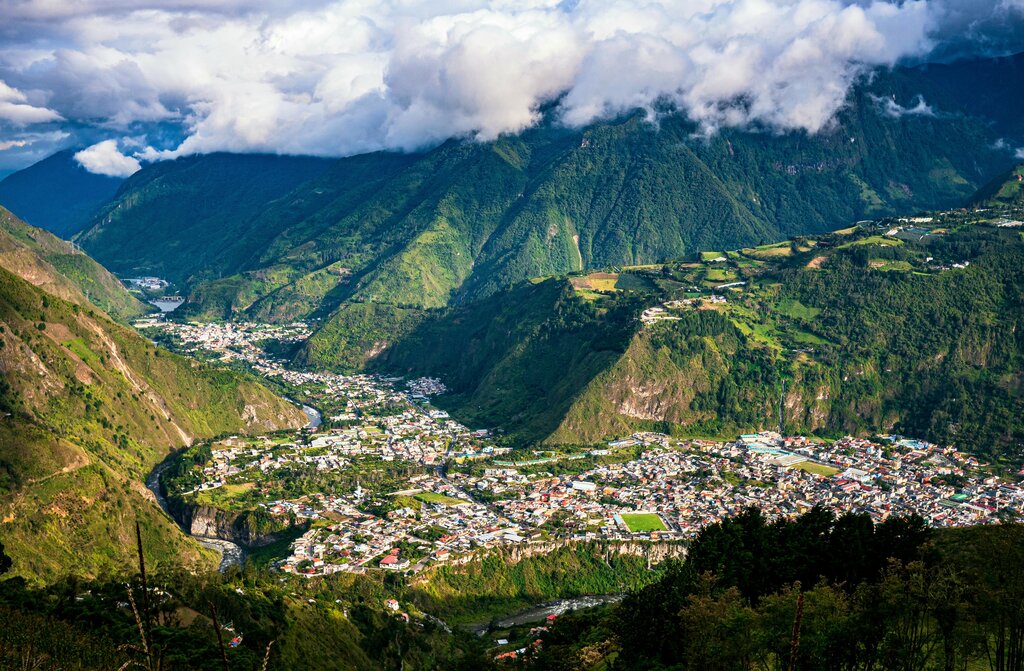
Near Cuenca, the best place to hike this month, now that the driest weather of the year has arrived, is Parque Nacional Cajas, high, lake-spattered moorland and mountain full of dwarf forests of polylepis trees, some of the highest forests in the world. Baños, on the cusp of the mountains and the jungle, also offers plenty of outdoor activities; see below for more details.
Oriente/Amazon: Parque Nacional Yasuni is a good place to visit this month, where jungle hiking trails are quite dry and where elaborate canopy walkways make it possible to see birds sunning themselves in the canopy in the increased sunshine. Another good place to base yourself might be Puyo, a place from which to visit the central jungle. Agencies here offer land-based jungle trips to spots within a few hours' journey from town.
Desert Coastal Strip & Galápagos: Probably the place to base yourself on the coast is Puerto López. It offers hiking in the nearby rainforest and trips to Isla de la Plata, where you can observe whales and other marine animals and birds. Guayaquil is a vibrant and interesting city, with a rejuvenated waterfront, several diverting museums, and fantastic nightlife to take your mind away from the overcast August weather.
What to Do
Quito & Highlands: In August, walking is the key activity in the Highlands. Even Quito has many beautiful viewpoints that you can walk to or take a gondola-cable car to: Quito's TelefériQo transports you up the slopes of Pichincha volcano, a volcano, to nearly 13,123 feet (4,000 m). There are superb treks to do in the mountains, such as the Quillota Loop or hikes in Parque Nacional Cotopaxi, which is full of spectacular volcanoes. Neither is far from Quito.
Another good place for diverse outdoor activities is Baños, where you can try mountain biking, bungee jumping, or bathing in natural thermal pools.
Oriente/Amazon: The smaller tributaries that are fun to explore by canoe have often dried up in the Cuyabeno Reserve. But this can be the perfect time to explore the jungle on its pathways. Some of these lead to canopy walkways that are great for watching the forest from above. You also see different wildlife: animals that live on or in the trees, such as snakes and spiders!
Desert Coastal Strip & Galápagos: With all that coastal fog, it might be a good time to try some coastal hiking, as it's colder for sitting around on the beach. A great place to base yourself right now is Puerto López. Here you're well placed for trekking in the teeming rainforest of Parque Nacional Machalilla, with excellent hikes and beaches, and an Indigenous community at Agua Blanca.
Then, of course, there are the boat trips to Isla de la Plata, where whale sightings are common at this time and where much of the same wildlife visible in the Galápagos can be seen.
This is also a brilliant month for diving and snorkeling in the Galápagos. Water visibility is less than the first half of the year, but still decent. However, increased nutrient levels in the water increase sightings of one of the blockbuster marine animals, the whale shark, as well as other nutrient-loving sea creatures. Blue-footed boobies nest this month, sea lions are giving birth, and whales and dolphins are commonly spotted.
Events in August
Festival de las Virgen de las Nieves, Sicalpa Viejo. A town in Chimborazo province, Sicalpa Viejo, celebrates the "Virgin of the Snow" throughout August with processions, parades, traditional food, and general merrymaking.
La Virgen del Cisne, Loja (August 15). The "Virgin of the Swan" celebrations are a 44-mile (70 km) procession of devotees culminating in Loja, commemorating the appearance of a vision of Mary at El Cisne in Loja province in the late 16th century.
More Helpful Information
Ecuador in July
Ecuador in September
Best Time of Year to Visit Ecuador
How Many Days to Spend in Ecuador