Highlights
- Get up close to the best waterfalls in the Golden Circle before the crowds
- Enjoy a cliff-side walk between small fishing villages in the Snæfellsnes Peninsula
- Board a traditional oak boat for a whale watching adventure in Húsavik
- Take easy hikes to geothermal pools, lava fields, and volcanoes around Lake Mývatn
- Soak in the Mývatn Nature Baths and/or Blue Lagoon before departing
Brief Itinerary
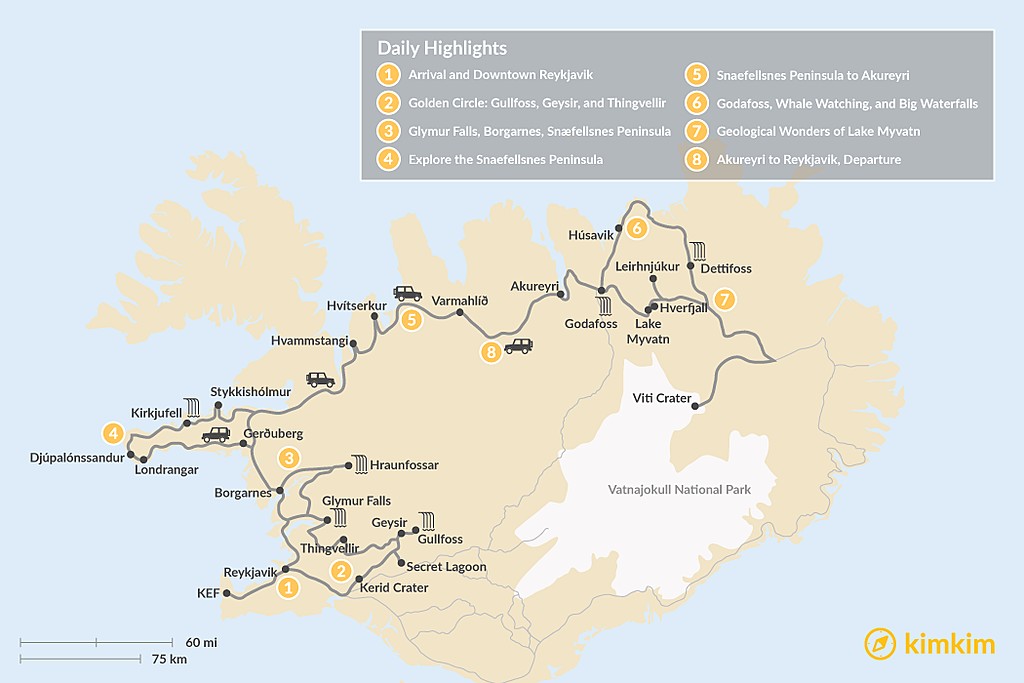
| Day | Highlights | Overnight |
|---|---|---|
| Day 1 | Arrive in Reykjavík, Explore Downtown | Reykjavík |
| Day 2 | Golden Circle: Gullfoss, Geysir, and Thingvellir | Golden Circle |
| Day 3 | Glymur Falls, Borgarnes, Snæfellsnes Peninsula | Snæfellsnes Peninsula |
| Day 4 | Explore the Snæfellsnes Peninsula | Snæfellsnes Peninsula |
| Day 5 | Snæfellsnes Peninsula to Akureyri | Akureyri |
| Day 6 | Goðafoss, Whale Watching, and Big Waterfalls | Lake Mývatn |
| Day 7 | Geological Wonders of Lake Mývatn | Lake Mývatn |
| Day 8 | Akureyri to Reykjavík, Depart |
Detailed Itinerary
Day 1: Arrive in Reykjavik, Explore Downtown

Welcome to Iceland! Upon arrival at Keflavík International Airport, you'll pick up your rental car and drive 30 minutes into Reykjavík. Since many international flights land in the early morning hours, you'll likely want to start your adventure with a hearty breakfast. Here are a few recommendations when you arrive in the city center:
Breakfast recommendations:
- Bergsson Mathús (opens at 7 am)
- Sandholt (opens at 7 am)
- Reykjavík Roasters (coffee)
- Brauð & Co. (bread and pastries)
From here, you'll have the rest of the day to explore the world's most northerly capital city.
Things to do in Reykjavík:
- Walk through Reykjavík's compact downtown area and check out the unique street art scene.
- Head to the waterfront to see the Sun Voyager Sculpture and Harpa Concert Hall with its cool glass architecture.
- Visit Hallgrimskirkja church on the hill and take the elevator to the tower for panoramic views of the area.
- To escape inclement weather, consider visiting a few museums such as the Northern Lights Center, the Saga Museum, the Marine Museum, or the Whales of Iceland Exhibition. You can also join a whale watching tour from the Reykjavík harbor, and snack on a world-famous hotdog at Bæjarins Beztu Pylsur.
In the evening, enjoy a variety of top-tier fish restaurants and Reykjavík's nightlife. A few options include:
Lunch/dinner:
- Sea Barron
- Kol Restaurant
- The Coocoo's Nest
- Kaffivagninn (lunch only)
- Café Loki
Nightlife:
- Mikkeller & Friends
- Skúli Craft Bar
- KEX Hostel Bar (Live music on weekends)
Day 2: Golden Circle: Gullfoss, Geysir, and Thingvellir

This morning, you'll start early from Reykjavík to visit Gullfoss and Geysir before the crowds and buses arrive, so you'll have these magnificent places all to yourself.
On your drive, consider a short detour to the Kerid crater, where you can walk around the rim of the volcano or down to the bottom to see the blue lake below.
At Gullfoss (Golden Falls) you can walk along a few different paths to see the tremendous falls from different angles and perspectives. You'll want to spend some time here admiring the incredible amount of water that flows over the edge every second.
Next, continue to the Geysir geothermal area where the Strokkur geyser shoots into the sky like clockwork every 5-10 minutes. In between eruptions, walk around the hot pools, steam vents, or climb the small hill above it all for a great view.
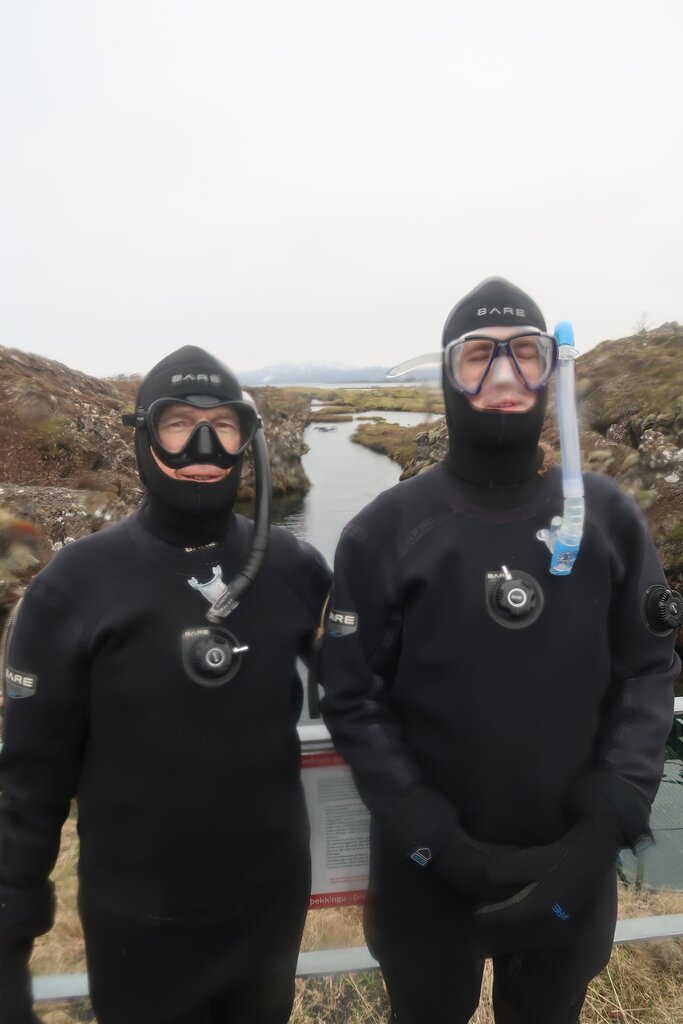
End your tour of the Golden Circle Route at Þingvellir National Park and learn about the traditions of the old Icelandic Parliament that met each summer at Law Rock. Walk between the giant rock fissure where the tectonic plates meet. In the visitor center, you can learn more about the history and geology of the area.
Another option for those brave enough to get in the water is to join one of the snorkel and scuba dive tours near here, where you can swim between the North American and Eurasian tectonic plates.
Before you leave the area, consider an evening stop at the Secret Lagoon (Gamla Laugi) in Flúðir, where warm geothermal water flows from the rocks. It's a great place to end a long day of exploring.
Day 3: Glymur Falls, Borgarnes, Snæfellsnes Peninsula

After breakfast in the Golden Circle, you'll pack up the rental car and head north to experience Iceland's west coast and the Snæfellsnes Peninsula. Both of these areas see fewer visitors compared to the south coast and will provide you with a bit more time to take in the sites at your own pace.
First, drive north and hike to Glymur Falls, Iceland's tallest waterfall (2 hours out and back). You'll hike beside a narrow canyon, which makes for some great photographs.
Continue on your drive to the peninsula and stop in Borgarnes and learn about the Settlement age of Iceland at the Settlement Center, or simply walk along the shore path near the water. If you have extra time, make some stops at the other quaint historical towns like Reykholt and Hvanneyri.
Once you get to the peninsula, head for the Gerðuberg Basalt Cliffs, where strange basalt columns rise up out of the earth. Park the car and walk around exploring and getting a closer look. Next, walk through the start of the Budhahraun lava fields on the coast, covered in moss or snow depending on the season.
Chat with a local specialist who can help organize your trip.
Keep driving until you get to the village of Hellnar, where you can stop for dinner at the small café near the water to taste their delicious fish soup and enjoy the setting.
- Fjöruhúsið café (Hellnar, excellent setting and fish soup)
- Bjargarsteinn mathus (Grundarfjörður)
- Sjávarpakkhúsið (Stykkishólmur)
- Narfeyrarstofa (Stykkishólmur)
Day 4: Explore the Snæfellsnes Peninsula

Today, you'll continue your peninsula explorations with the cliff-side trails at Arnarstapi where you can get up close to some great views, lava formations, and arches in the rocks. In fact, you can follow the trail all the way to Arnarstapi from Hellnar, starting from either direction.
Then, head for the Londrangar lava formations, which you can view from afar or up close (about 15 minutes by foot). A little farther along the road is the Visitor Center for the peninsula, where you can learn more about the volcanic system and the area.
If the weather is dry, take a stroll along Djúpalónssandur black sand beach with debris from a shipwreck (tip: photograph the rusted mangled metal pieces on the black sand). Here you'll find four stones of different sizes, used by sea captains to test the strength of those seeking to join their crew. While facing the water, look for a small trail on the right side of the cliffs that leads to the site of a major fishing operation.
As you near the westernmost point of the peninsula, look for signs for the Saxholl crater. It's worth a quick stop to walk up the stairs that take you to the top with nice views of the surrounding area.
Continue your drive around the other side of the peninsula and end your day with a visit to Kirkjufellsfoss waterfall with Kirkjufell mountain in the background (one of Iceland's most photographed).
You can either spend the night in Grundarfjordur near the mountain and waterfall or continue to the larger town of Stykkishólmur. On the way, you can stop at the Bjarnarhöfn Shark Museum and taste some hakarl, or fermented shark
Day 5: Snæfellsnes Peninsula to Akureyri

Spend the morning seeing any sights that you may have missed in the Snæfellsnes Peninsula (Berserkjahraun Lava Fields, Bjarnarhöfn Shark Museum) before you re-join the Ring Road heading clockwise toward Akureyri.
The scenic drive from the eastern side of the Snæfellsnes Peninsula to Akureyri is around 4-4.5 hours and you'll want to keep your camera close. The north coast of Iceland may be the country's best-kept secret. While crowds of tourists populate the south coast and Golden Circle, visitors to Akureyri and Lake Mývatn can enjoy the beautiful landscapes and wonderful volcanic areas all to themselves. A few stops to keep in mind on your drive:
-
Icelandic Seal Center in Hvammstangi (10 minutes off the Ring Road): This area is also home to one of the largest seal colonies in Iceland. Look for several sea watching spots along the coast a bit north of here.
-
The Hvítserkur "basalt troll" (add an hour to your drive): Close to the shore along the Vatnsnes peninsula is the black and white rock formation known as Hvítserkur—a troll who, according to the legend, was caught in the sun and turned into stone. While it's a nice sight from above, you'll also find a trail leading down from the parking lot.
- Varmahlíð: Stop in this small town, where Route 1 and Route 75 intersect (an hour before Akureyri). Here you can visit the Glaumbær Farm and the Víðimýrarkirkja Turf Church. This is a great way to experience the turf houses and to see how Icelanders used to life. The turf church, built in 1834, is one of the only remaining preserved turf churches in Iceland.
When you arrive in Akureyri, Iceland's second largest city of 18,000 people, get out and walk around town. Be sure to check out the thriving restaurant, café, and bar scene, and visit the Akureyrarkirkja church on the hill. With more time, follow the footpath along the calm old harbor to see more of the picturesque fjord.
Another option is to continue farther to Lake Mývatn for the night so that you have more time to explore that area.
Food recommendations in Akureyri:
- Bláa Kannan (café)
- Strikið (lunch/dinner)
- Akureyri Backpackers (nightlife/bar)
- Ölstofa Akureyrar (nightlife/bar)
Day 6: Goðafoss, Whale Watching, and Waterfalls

Spend your morning with breakfast in Akureyri before you get on the road (Route 1) toward Húsavik and Lake Mývatn. Be sure to take a look back toward Akureyri from the other side of the fjord; you can see the mountains behind the town and it makes for a great photograph.
After about 35-40 minutes on the road, you'll see Route 85 to the left for Húsavik. Despite this sign, stay on Route 1 for another couple of minutes to reach Goðafoss (you'll head to Húsavik after this detour).
When you arrive at the "Waterfall of the Gods," hike a couple of minutes to see Goðafoss up close, or take a longer walk around to see it from multiple perspectives. The waterfall was named when Iceland converted to Christianity in 1000. Legend says that when Þorgeir Þorkelsson (local chieftain and law speaker) made the decision to convert the country from the old Nordic gods to Christianity (in order to prevent war), he threw the old gods into the falls to symbolize the change to the new era.
From here, you'll continue back to the Route 1/Route 85 split and drive another 35 minutes to Húsavik, the whale watching capital of Iceland. Unlike in other regions where you must set sail to find whales, Húsavik often has whales, porpoises, and seabirds close to the harbor. You can join a tour on newer, carbon-neutral ships that are quieter (nicer for whales) and don't pollute the environment (nice for everyone). We recommend North Sailing, right on the harbor, and the entire building, restaurant, and café were made from recycled wood. Also, check out the whale museum and the church by the harbor.
From here, head to Dettifoss, Europe's most powerful waterfall. Take a 15-minute hike upstream along the basalt cliffs and you'll encounter another giant: Selfoss. You can approach from either the east or west side of the river (there are two roads): the road on the west is paved, while the one on the east is gravel. Both sides offer nice views of the waterfalls, but you have a nicer view of the full canyon from the east.
Continue driving to Lake Mývatn and spend your evening relaxing in the Mývatn Nature Baths—the North's equivalent of the Blue Lagoon, but with fewer people, lower prices, and better views. You won't find all the spa extras that you do at the Blue Lagoon, but you'll find a couple of large geothermal pools, a sauna, and a steam room. You can enjoy views down over the lava fields and the craters around Lake Mývatn as you sit in the mineral water.
Food recommendations in Mývatn:
- Vogafjós Cowshed Cafe (Mývatn)
- Gamli Bærinn (Myvatn)
- Restaurant Gamli Baukur (Húsavik)
Day 7: Geological Wonders of Lake Mývatn

The area surrounding Lake Mývatn has the highest concentration of volcanic and geothermal sights in Iceland. In one day you can explore a plethora of pseudocraters, rock formations, lava fields, and volcanic craters
The following sights are listed roughly in order as you would approach from the western side of the lake, driving counterclockwise.
-
Skutustadir pseudocraters: These pseudocraters were formed by when hot lava flowed over the wet marsh area causing steam explosions. Take an easy walk among many pseudocraters on the shores of Lake Mývatn and loop around the smaller lake Stakhólstjörn. You can hike up to a few of them or just walk around them all. Enjoy nice views across the lake where you'll see steam rising from the geothermal areas and other volcanic craters in the distance.
-
Dimmuborgir lava formations and "the Church": Take a walk beneath large, strange, contorted lava formations caused when lava flows cooled. You can see the start of the formations here, or hike the small loop in 15 minutes. Or, walk the bigger loop (2 miles) where you'll see Kirkja (The Church), a natural lava formation that resembles a vaulted church arch, and a nearby cave.
-
Hofdi rock formations: A little past Dimmuborgir you'll see a small turnout for Hofdi. You could spend anywhere from 15 minutes to over an hour here walking the wooded trails that take you to some very unique rock formations in the lake.
-
Hverfjall cinder cone and crater walk: The volcano known as Cinder Cone is hard to miss from anywhere around Lake Mývatn. Climb up the side for a great view of the surrounding area, where you can see the Skutustadir Pseudocraters and steam from the Mývatn Nature Baths and Hverarond Geothermal area.
- Hverarond mud pits and steam vents: As you leave Lake Mývatn heading east, your first detour is the Hverarond geothermal area. Here you can walk around various bubbling mud pits and steam vents, admiring the interesting red and orange colors. Exploring the entire area takes from 30 minutes to an hour.
Just after Hverarönd, you'll see a turnoff for Krafla/Viti. Take the road and drive 10 minutes to these attractions:
-
Krafla/Viti crater: Drive past the Krafla power station (also worth a stop) and you'll find the Viti crater, part of the Krafla volcanic system. This crater is filled with a bright blue lake.
- Leirhnjúkur lava fields and geothermal area: Explore the Leirhnjúkur area and you'll think you were on another planet. After a 10-minute walk, you'll arrive at some steam vents. You can hike a big loop in an hour to see all the highlights, or stick to the first sights along the wooden path
Day 8: Akureyri to Reykjavík, Depart

It's time to say farewell to Iceland! Enjoy your last moments in Akureyri before you return to Reykjavík on a domestic flight (about 45 minutes from Akureyri) or by driving (about 4.5 hours from Akureyri). From here, you'll connect to your international flight home.
More Great Iceland Itineraries
Looking for more inspiration for your trip to Iceland? Check out these other Iceland itineraries, explore different ways to spend eight days in Iceland, or discover the best time to visit Iceland.
Map